
piano teacher

Drill & Excel On the Piano

Piano Method Books That Make Teaching Easy!

Hey fellow piano teachers, what if there were piano method books that made your teaching job so easy, you feel you’re hardly working at all? That’s exactly what the “Drill & Excel On the Piano” book series does! Click any book to watch a movie where the author goes through each page with commentary. Most piano method books are songs with little information included. This means you have to explain in detail every new concept. And since piano method books don’t include every part of the lesson needed, you have to supplement books for teaching exercises, scales, theory, note naming, and rhythm games to improve their reading ability. Having multiple books also makes it challenging in the lesson for both you and the student.

Everything in one book

At Melody Music Publishers, the “Drill & Excel On the Piano” series has everything in one book. Each book is in 3 chapters and includes multiple note reading and interval worksheets, rhythm drills, exercises, and special exercises for specific skills, scales, and 20 original songs per chapter (totaling 60 songs per book)! Since the author, Kathi Kerr, writes the songs, a student has to read the notes and not rely on their ear to play. Most method books brag about having songs students are familiar with. However, if reading music fluently is the goal, a student can trick the piano teacher when playing a song if they rely on their ear instead of reading the notes.

Easy Steps to follow

Teaching from the “Drill & Excel On the Piano” series is nice because it lays out the information in an easy to follow step format. Without a book to guide the teacher and student, it’s easy to forget about important steps the student needs. However, with these books, the piano teacher can relax and know each critical step is included, taught straightforwardly with examples, drills, and exercises. The repetition given ensures the student fully understands each step before moving on to the next one.

Written Worksheets

Why are writing assignments so important? I believe writing the information is the first layer of understanding and retaining the information. When a student repeatedly writes the names of the notes or intervals, they’re more likely to retain the information. With the “Drill & Excel On the Piano” books, there are multiple worksheets to help students learn and remember notes. No acronyms are taught, like “Every Good Boy Does Fine.” Instead, the staff’s logic is shown, and five sets of notes are taught at a time with multiple worksheets per set of notes.

Rhythm Drills

Where’s the rhythm in most method books? Most piano method books may give the value of each kind of note, but nothing else. I have found rhythm is the most neglected part of piano method books and lessons. A student needs more than just shown each note’s value. To read rhythm fluently requires playing multiple rhythm drills. In “Drill & Excel On The PIano,” the note’s value is taught with multiple rhythm drills for the student to play. Playing them with a steady beat, and counting the beats out loud is recommended.

Exercises

As mentioned earlier, most piano instructors will use a separate book for exercises. However, many exercise books are not suitable for the beginning student when the pattern includes more than a five-note hand position. In “Drill & Excel On the Piano” books, the exercises correspond with the chapter’s songs and skills needed. For example, in chapter 1 of book 1, only five-note pattern exercises are given that go with the songs. As the hand position expands, the exercises do as well. There are also “special” exercises that go along with the skills needed for the songs. In book 1, chapter 3, an exercise to teach the skill of independence of hands is given. This helps when playing the songs with one hand louder than the other, and one playing staccato while another playing legato. A student first learns the skill in the exercise before applying it to a song.

Scales

Another supplemental book piano teachers often use is scales. In “Drill & Excel On the Piano,” each chapter has one key signature (except the recap chapters), and all the songs, exercises, and scales will be in that key. This makes everything they’re learning correspond to each other and creates a clear path for learning. Also, most scale books show the scale by notation. Playing scales by reading the notes may not help the student remember what sharps or flats are in each scale and key signature, or even understand them. In the “Drill & Excel On the Piano” series, the student plays scales by knowing what’s in each key signature. This helps the student have better retention and understanding of the scales, which is the foundation for learning music theory.

Intervals

Intervals are taught beginning in book 2, chapter 3. The emphasis in book 1 and book 2, chapters 1 and 2, are reading fluently and exercises to acquire the skill of playing. Chapter 3 of book 2 starts by showing the staff’s intervals in the key of C (C/D, C/E, C/F, C/G, etc.), with the interval number beneath. However, it doesn’t stop with merely explaining intervals. There are multiple worksheets for the student to identify the interval number without counting. Once a student can identify the interval at sight, this helps in sight-reading. Without repetitive written assignments, most students are not able to identify them at sight.

Songs, songs, and more songs!

And finally, the best part of “Drill & Excel On the Piano” are all the beautiful songs written by author Kathi Kerr. As mentioned earlier, the songs correspond with the chapter’s key signature. Written melodically, a student will find themselves singing the songs apart from playing them on the piano. Starting from book 2, each piece is in a different style with a commentary written by the composer. And best of all, they’re fun to play!

Each book recaps the previous books

Whatever the student’s level, he or she can start with any book in this series, since from book 2, the first chapter is a recap of the previous books—this way, no critical steps, and information are missing. For a beginning student ages 8-adult, book 1 is recommended. If a student has played a little piano, they can start with book 2 that begins chapter 1 with hands together. This book is also great for a self-taught student that plays well but may have missing information or someone taught incorrectly. Book 3 is excellent for the early intermediate student. And finally, book 4 is for the late intermediate student. There are more exercises, special exercises, rhythm drills, and lots of theory worksheets in books 3 and 4. “Drill & Excel On the Piano Book 5” is set to come out in late 2021 for the advanced student.

My first experience with this piano method book

When I had finished book 1, I used it on the students I was teaching at the time (I called them my guinea pigs). One of my students in particular had struggled in reading. However, when he started playing the multiple songs in each position, he was so accomplished at reading, he began sight-reading the songs nearly perfectly by the end of the chapter! I remember feeling so at ease and thinking “The book is doing all the work!” It was so much fun to see him go from struggling to sight-reading!

Order today and enjoy teaching

Order your copy of “Drill & Excel On the Piano” to relax and have a great time teaching your students, knowing they’re getting all the essential steps. Using drills and repetition, your students will have a deep understanding of all concepts and play the piano like a pro. It’s exciting to see the students’ progress and growth. If you’re a piano teacher who hasn’t registered, click here to sign up to receive discount codes for free shipping and 50% off your first copy, then free shipping and 20% off all recurring orders! Thank you for your passion and dedication to teaching private piano. We welcome your comments and suggestions to this post.

Kathi Kerr - owner Melody Music Publishers

Kathi Kerr founded Melody Music Studios in 1989, a nationwide music instruction studio. In 2017, she founded an independent publishing company called Melody Music Publishers. They offer piano and singing method books using small steps and repetition, how students think and learn.

Piano Method Books That Make Teaching Easy! Read More »

Piano Lessons

How To Teach a Piano Transfer Student

Teaching a piano transfer student can be the most difficult type of student for a teacher. This is the student that has had lessons for 6 months or more, ranging from late beginning to late intermediate level. Inevitably, the student is going to compare you to their previous instructor. And since no two people teach the same, you’re going to offer a different style and approach. If the student has bad technique, or wrong or missing information, this can create even more difficulty. So what are the best ways to create a smooth transition into your teaching style?

Be Prepared

Before the first lesson, find out what books the student has been using and ask for any notes from the previous instructor. Take the time to become acquainted with the curriculum if needed, and read the notes if possible. This will also give you insight into the previous teacher’s style and approach, as well as the direction of the student’s past lessons.

Establish a Rapport

The very first lesson is the most critical. It’s important to start out by getting to know the student and letting the student get to know you. Spend a few minutes to let the student know your training background and experience. Then take a few minutes to ask the student questions about their past piano experience and what he or she is interested in learning. The student will feel more comfortable with you and will feel you’re interested in what their interested in. Then have the student play the last song they were studying or their favorite song. Ask him or her a lot of musical questions to find out what they know or don’t know. Even an intermediate student may have missing or wrong information.

Make Changes Slowly

Changing too much too soon for the piano transfer student is usually the biggest mistake made. This is especially true for an intermediate student that has been playing a year or more with wrong technique or information. Changing a bad habit is the most difficult part of learning. Most students want you to validate their ability, so begin by complimenting him or her on anything done well. Even though it may go against your grain to allow bad technique, it’s best to wait until you’ve given several lessons and established a rapport before making huge changes. If there are multiple changes needed, take one at a time so not to overwhelm the student. That being said, it’s also important to show the student you can challenge them to the next level, so give the new student a few bread crumbs of information and things to work on in the assignments.

Be Careful Commenting on the Previous Piano Teacher

Each piano transfer student will have had a positive or negative experience from the previous instructor. With either scenario, it’s important to keep your comments about him or her at a minimum, especially negative comments. First, you want keep the focus on the direction between you and the student. Second, if you tell the student he or she was taught incorrectly, it may cause frustration and a sense of wasted time and money. If the student had a good rapport with the previous instructor, it may create a division between you both. Once you’ve received the curriculum and notes from the previous instructor, keep the conversation on how you will be teaching and the direction you would like to take.

Not every student-teacher is a match

I believe being the right instructor for a transfer student is more difficult than for the beginning student. If the student is an intermediate level, he or she may have specific interests. You may not be able to take the student where their interests lie. If that is the case, be honest with the student, letting him or her know you have THEIR best interest at heart, and kindly refer them to another instructor you may know that can offer what they want to learn. Also, not every personality types are a match. If this should happen, don’t beat yourself up over it. There are plenty of other students your teaching style and personality will be a great fit for.

It Gets Easier

While you may feel like you’ll be the “new” instructor forever, before long, you’ll be their new favorite! Just like any relationship, it takes time to establish. Be patient and soon you’ll be the instructor they compare others to!

Kathi Kerr - owner Melody Music Publishers

Kathi Kerr founded Melody Music Studios in 1989, a nationwide music instruction studio. She also founded Melody Music Publishers in 2017, an independent piano method books written how students think and learn.

How To Teach a Piano Transfer Student Read More »

Intermediate Piano student

Are Piano Method Books Needed For Intermediate Students?

I recently read a piano teacher’s blog that stated the intermediate student no longer needed a method book. His point was there was nothing “new” after level 3 in the method books. He continued, saying the intermediate student only required repertoire to play and practice. But are piano method books needed for the intermediate student? Before six months ago, I would have totally agreed! Most piano method books offer nothing new after level 3 except songs to play. However, after writing Drill & Excel On the Piano book 3 and Drill & Excel On the Piano Book 4, I now realize there’s actually MORE skills and concepts for the intermediate student to learn than the beginning student. Here are some of the things I’ve included in books 3 and 4 for the intermediate student.

#1 Intervals

While intervals are mentioned in most of the early level piano method books, they don’t explain the KINDS of intervals. In Drill & Excel book 3, there are interval worksheets for the student to identify the intervals in various key signatures. Then in book 4, ALTERED intervals are introduced, with worksheets for the student to identify the kind of interval (major, minor, diminished, or augmented). Giving the student writing assignments helps the student to learn in a deeper way, rather than simply reading the information.

#2 Rhythm

In teaching rhythm, most method books only show how many counts a note is held. However, in Drill & Excel On the Piano series, there are multiple rhythm drill pages for the student to play on one note and count out loud. This gives the student a lot of repetition in reading the rhythm to create fluency. And in books 3 and 4, the rhythm goes beyond most method books, including sixteenth notes, triplets, and triplets against other notes (even or other triplets). Learning to read rhythm is much like driving a car. It can’t be taught be explanation, but in DOING.

#3 Exercises

Exercises are not included in most method books, even in levels 1 and 2. Piano instructors that want their students to play exercises use a separate book for that. However, the Drill & Excel On the Piano series includes exercises in all 4 books. Books 3 and 4 are especially important, because they offer specific exercises for the skills introduced. For example, book 3 has a chromatic scale exercise, finger pedaling exercises, and repeated notes using different fingers. Not only are these skills added in the chapter’s songs, but is common among other pieces. Another exercise in book 3 is changing fingers on a held note. Book 4 has ascending and descending 3rds, 4ths, 5ths, 6th, and 7ths. It also includes the “independence of fingers”, playing a triad and emphasizing each note of the triad. These are important skills for the intermediate student to acquire when playing difficult pieces.

#4 Theory

For the intermediate student, theory is especially important. A beginning student has difficulty in just playing and reading to even think about theory, while the intermediate student can understand concepts. And knowing theory helps in the student’s reading skill. It can also help in songwriting and improvisation. The Drill & Excel On the Piano books 3 & 4 include a lot of theory beyond the altered intervals mentioned earlier. It includes triads, triad numbers, and transposing songs to other keys by using the triad numbers. These are important skills and knowledge for the intermediate student to acquire, which may not be understood by simply playing various pieces.

#5 Songs

Since the songs in the Drill & Excel On the Piano series are written specifically with the information and skills taught in each chapter, they’re especially valuable in the learning progress for the intermediate student. Instead of playing random pieces, the songs are strategically planned to teach what is taught. Each song increases slowly in difficulty , giving the student a challenge incrementally as he or she plays them.

To Summarize

So are piano method books needed for the intermediate student? In short, yes, because the intermediate student needs to learn certain skills that may not be taught by simply playing various repertoire. The Drill & Excel On the Piano books 3 and 4 are the perfect books for their continued learning to bring the student to the next level. Check out our books at MelodyMusicPublishers.com. Teachers receive free shipping and 20% off all orders. Click here to register.

Kathi Kerr - owner Melody Music Publishers

Kathi Kerr is author and founder of Melody Music Publishers. She writes her book based on over 30 years’ teaching experience the way students think and learn.

Are Piano Method Books Needed For Intermediate Students? Read More »

Piano Method Books

What Piano Teachers Think About Method Books

What do piano teachers think of the current method books on the market? I’ve played piano my whole life and actually started teaching as a child to my friends that begged me to teach them. After college, I began teaching professionally in. In 1989 I founded Melody Music Studios, hiring music instructors for all instruments. I realized shortly after teaching that the method books didn’t help students read music fluently and caused a lot of frustration. So I started writing my own workbooks to supplement the method books, “Rhythm Workbook” and “Note Reading Workbook”. Even with the workbooks supplementing, I was still frustrated because most method books are basically a book of songs with little to no instruction, or a clear step by step direction.

I’m so excited about my books that I want to share with ALL piano teachers. Teachers can fill out a short form to receive free PDF samples and discount codes for 20% off when ordering. My favorite field on the form is the question: “What method books do you use, and why do you like or don’t like them?”. Here are some of the interesting answers I’ve received.

Quotes From Piano Teachers Nationwide!

“I use various method books = Piano discoveries for bright readers, Faber and Faber for the middle of the road student and Music Tree.  I think Faber uses too many finger numbers and Piano Discoveries is a bit hard for the average learner.  I love the Music tree philosophy, but fine their books a bit dry and academic.”

“I like Alfred Premier and Faber.  I think the music is engaging and the concepts are introduced in a clear way.  I’m not a fan of Hal Leonard or Bastien.  I feel they are not the best way to introduce music concepts.”

“I am eclectic, founding something useful from everything since I also teach students learning difficulties and disabilities.”

” Faber, it has a lot of jazz, pop tunes. I love the progression.”

“Faber Piano Adventures.  I am content to use them, but after so many years, a change of approach may be helpful.”

“Faber and Alfred–I like the multi-key approach, fun pieces, and the emphasis on correct technique.”

“Alfred,  Faber –  getting stale”

“Faber Piano Adventures (mostly)  Logical order, enjoyable content”

“The ones that I have used with my students, I like them.  “Color, Say it, Play it”, and Drill It and Kill it.  It helped my students learn how to read notes with ease and made it more fun.  Drill it also helped with their sense of rhythm.”

“Faber, Bastien, and Music for Little Mozarts. I like the way Faber introduces the notes on the staff and how the hands aren’t always in the same position. On the flip side, I like Bastien for some students because it does stay in one or two positions in the beginning. Sometimes I will start students in Bastien and then switch them to Faber.”

“Faber (technique, pacing); Celebrate Piano! (reading approach, theory/ear training, creative pieces)”

“Succeeding at the Piano, The Music Tree, Piano Safari, Piano Pronto”

“Alfred Premiere Piano Course. Upbeat pieces, concepts in stepwise, logical order, good explainer boxes.”

“I use a variety of methods from Piano Pronto to Piano Adventures to none depending on the needs of the student.”

“Faber Piano Adventure, I like this method but open to learn new approach. Thank you!”

“I like what I use but am always looking  to improve.”

“I use Piano Safari and Music Tree.  I like that they offer intervallic reading, and with Piano Safari, also do Rote teaching so students can experience more complicated pieces before being able to read them.”

“Bastien piano books- I like how they correspond with each other so that the child can feel like he/she is receiving more than one book around the same level that each teach a different technique and strength”

“I use Faber for children and generally both Faber/Alfred for adults.  I think the method books move a little too quickly for a lot of adults which is why I use 2 separate ones.”

“The only one I use with all levels/all ages is Mikrokosmos volume 1 by Bela Bartok.   For suppliment.”

Main theme about current method books

The main comments I’ve received seem to be that most piano teachers use an assortment of method books. I understand that, since each student is unique and different students may require different books . However, it seems like teachers use an assortment of books mostly because one book doesn’t have all the aspects of teaching they want. One book may have great songs, while another uses more theory, while another has an easier step by step learning.

Inspiration For a New Line of Piano Books

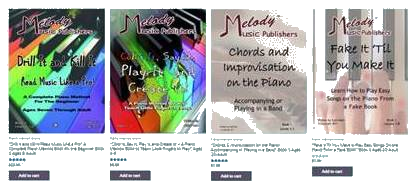
One day as I was teaching, I got inspired to write my own method book that would include everything a student needed, all in one book. So 2017 I started writing “Drill It and Kill It-Read Music Like a Pro!” This 200 page book includes the note reading and rhythm drills from the workbooks, but also exercises, special exercises for specific skills, scales, theory, composition, and 100 great original songs that include what is learned in each chapter. It’s not just a book of songs, but a text book, theory, and a history book. Finally one book for the traditional lesson that teaches everything, and lasts for a year or more. t’s so easy to use in a lesson because of the comprehensiveness and easy to follow step by step learning. I also love watching my own students learn how to sight read any song!

Learning Chords & Improvisation

For an older child or adult that just wants to learn chords and improvisation, the “Chords & Improvisation on the Piano” is the perfect book. Along with teaching scales, key signatures, triads, and inversions, it also includes assignments for the student to play what is learned with improvisational patterns. Then there’s the older student that wants to play their favorite easy song without a lot of hassle in learning to read a full score. My “Fake It Til You Make It” book includes just the treble clef notes and chords for the left hand, so the student can play fun songs from a fake book. If you have a student that just needs a little extra help in reading notes or rhythm, the “Note Reading Workbook” and “Rhythm Workbook” gives drills and writing assignments to have the student reading professionally. No Every Good Boy Does Fine is taught in the note reading workbook.

For the Young Students

There are a lot of books written for the preschool age, but this 50 page book for ages 4-8 called “Color It, Say It, Play It, and Create it” starts out as a coloring book for the 7 keys using the 7 colors of the rainbow, and includes drills, fun children’s songs, assignments for rhythm, and composition. It stresses rhythm, counting, and how to keep a steady beat, which a lot of books do not offer for this age. There is also drills for the student to listen and copy for ear training. The staff notes are not introduced, but the notes ascend and descend as though it’s on a staff, making it easy for the student to learn to read notes after completing it.

I would love to share my books with you! To order, simply go to the store and use your discount codes for 20% off! This is not a temporary discount, but a permanent discount for you to use each time you order books for you or your students. I appreciate your dedication and giving a gift for a lifetime to each of your students! Please feel free to comment below, so others can read and learn from your experiences. Thank you.

Kathi Kerr/owner and author of Melody Music Studios and Melody Music Publishers

.Author for piano method books

What Piano Teachers Think About Method Books Read More »

Piano Student

Teaching a beginning piano student long term!

So you just signed up a new beginning student. That’s great! But if you’ve been a piano instructor for more than five minutes, you know the most difficult part is keeping a beginning piano student long term!! An intermediate student is rooted, so you don’t have to work to keep them, however there’s challenges for that level as well. It’s often difficult to teach a beginning piano student long term through what I call the “beginner’s hump”, the first 6-9 months of lessons. Since the student has no skill, learning the piano can be frustrating and the opposite of “fun”. There will always be students that will stay no matter what you do because it’s in their DNA to play the piano. Conversely, there are the students who will never learn (or desire to learn) the piano. So let’s leave those two type of students out of this discussion. The majority of students will be in the middle; they’re probably not going to make music a career, but have a love and desire to play the piano. This can apply to both children and adults.

So what are the do’s and don’ts for keeping the majority of the beginning piano students long term? In over 30 years of teaching, I’ve been able to teach most students for a year or more, and some for multiple years. Here’s a list of what I’ve found that help keep the beginner student motivated through the difficult beginning stage.

Be fun and encouraging in the piano lesson

As the piano teacher, you create the environment. If you’re frustrated or bored, the beginning piano student will feel that from you. This can hinder their motivation to learn. I believe a lot of piano teachers make the mistake of teaching ALL students the same, no matter their level. However, a beginner student needs a lighter approach and not the intensity you may have with an intermediate or higher level student. The beginner may be nervous about playing and making mistakes. Being encouraging is very important. They will believe in themselves if they feel YOU believe in them. Let the student know it’s OK to make mistakes, and that it’s part of the learning progress. You may also want to let them know you made mistakes when you were a beginner. This approach can be used for all ages, not just the young student, as the older child/adult needs encouragement the same (maybe more?). And giving the student accolades is not only for their confidence, but also instills playing correctly, as he/she may not even know they played it correctly! This approach is especially important when correcting the student. Keep the critique comment to their mistake only and how to correct it, never a brow beating comment. Most of all, just have fun with the beginner so they enjoy learning and associate piano and music with something that can be enjoyed.

Don’t overwhelm the beginner piano student

Out of all the do’s and don’ts, this is probably the most critical part for the first 1-3 months of lessons. Once a student feels overwhelmed and feeling unable to understand or play what’s asked, the student may want to quit. Usually the student will come up with every excuse for quitting EXCEPT feeling overwhelmed and frustrated. Most students will blame themselves, thinking they’re just not smart enough. As teachers, it’s easy to give way too much information out of our own passion for music. Also it’s easy to forget how difficult even the simplest of playing can be. It’s important to “think” like a beginner when teaching. The very first lesson is the most crucial lesson in setting the standard. I always tell my staff, it’s better to UNDER give than to OVER give on the first lesson. If you have a quick learner, you can always pick up the pace on the following lessons. It’s difficult to impossible to reverse the pace after the first lesson. To make sure your student understands, it’s best to ask him or her questions. I always ask the student way more questions than they ask of me. I never feel like a student understands fully after only explaining a new concept once. I’ll either have them “do” the thing I just explained, or ask questions. Games and drills are a great way to make sure he or she understands fully, and can also be fun for the student.

Be flexible in the direction of the lesson

I’ve often heard teachers writing a lesson plan for private lessons. I’ve NEVER written a lesson plan for a private lesson. The great thing about teaching privately is you can approach each student uniquely. A lesson may go in a different direction than you had expected. It may depend on whether the student understood the previous lesson (and may just need a review), or a question that needs a full lesson to explain. Some students may want to learn something different than what you’re currently teaching. This happens more with the older child or adult. I do want to make it clear that I believe you, the instructor, is ultimately in charge of the direction taken. You should never be talked into teaching anything you feel is not in the best interest of the student. It may be a song beyond their ability, or jumping ahead to a level that will bypass important steps. However, if it’s within their level and ability, I see nothing wrong with diving into it. Or even better, using a part of the lesson. You may have a student that loves to write songs, which I definitely encourage students to do. So why not use the last 5 minutes to let them play their song for you? It could turn into a teaching moment as well as be a lot of fun for the student.

Learn how to “read” the student

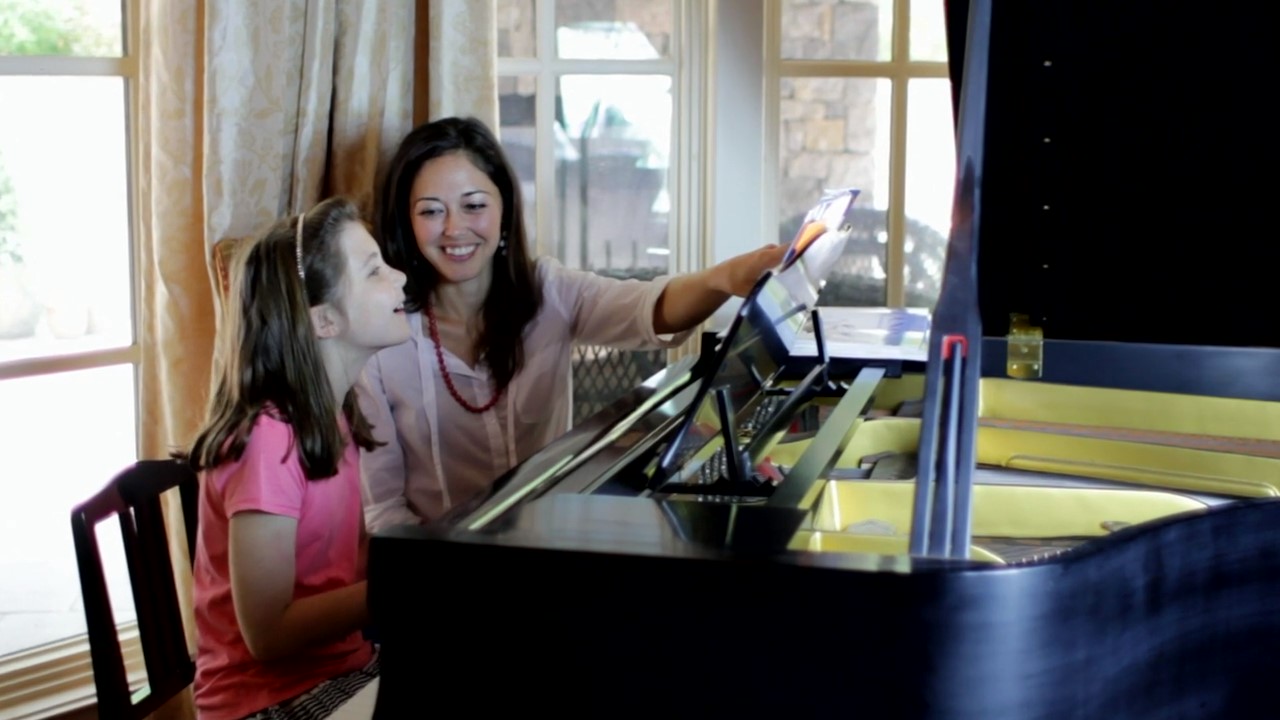
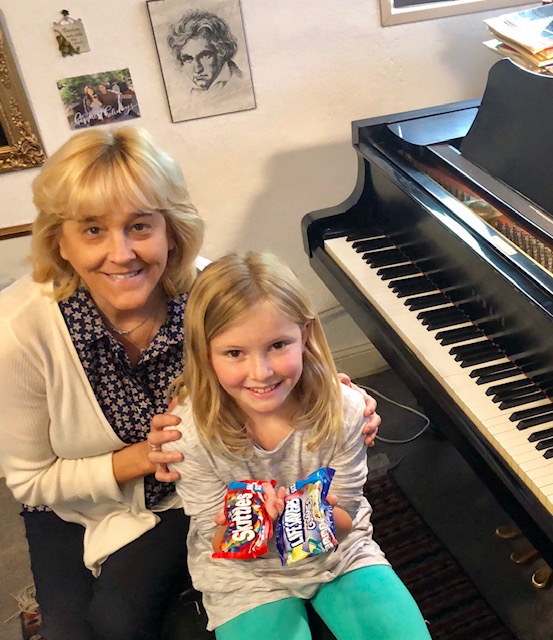
Piano teacher and student

This is similar to not overwhelming the student, but goes deeper than making sure the student fully understands. As lessons progress and you get to know your student, it’s important to make sure you’re sensitive to what may be happening in his/her life. There may be times when a student is having trouble at school or home, or with a relationship, etc. Some students will be outspoken about what is going on, while others will be quiet. I always start out my lessons with “How are you doing?” and “How was your week?”. For me, this is not just a way to start the lesson, but a chance to feel how the student is doing emotionally. This may impact how you teach that particular lesson. I’m not advocating asking personal questions or having a therapy session, but if you feel there may be something bothering the student, it can hinder their learning. If it continues, you may need to speak to his/her parent(s), if a child, or for an adult, let them open up to you if they wish. If the student feels they can be somewhat open with you, it helps to create a bond in the lesson and may help in the learning progress. I do want to make it clear, however, it’s important to keep a boundary between you and the student. Although you want your student to feel comfortable, the student is not your child or best friend, so make sure to keep the relationship professional. This can go for you, the instructor as well. If you’re not having a great day, put your poker face on when teaching, and never let your emotions come into play in the lesson.

Different types of learning

Another aspect of “reading” the student is figuring out how he or she learns. Some students learn by verbal explanation, while others learn by watching. Some only learn when actually playing. There are specific methods for the different learning types, so that may help you decide what method to use. That being said, I think it’s a good idea to teach children the opposite of how they learn after the first 9-12 months of lessons. This may help him/her to learn in different capacities since they may need that skill in a job as an adult. There’s also the learning impaired, such as autism, dyslexia, dyscalculia, etc. I once had a student with a disorder where his brain processed faster than his motor movement. I tell most students to read ahead, but with him I had to tell him NOT to read ahead and offered a slightly different approach.

Practicing…the #1 reason to cancel

I’m sure you’ve had many students (or parents of students) cancel for a lack of practicing. I’ve actually never had one of my own students cancel for this reason. That’s because I don’t mention practicing to my beginning students under the age of eight. Wait what? I can hear you all asking….don’t talk about practicing? Yes you heard me right! I’m not saying practicing is not critical for a student to learn, because it definitely is! However, I don’t expect a young beginner to practice for any length of time. The young student hasn’t the discipline or enough knowledge TO practice for more than 5-10 minutes. I simply give easy assignments and tell the parents to have their child “play” it for them. For students over the age of eight, I talk briefly about practicing daily for only 20 or so minutes at a time. This is usually the longest time frame a beginning student can handle, and it doesn’t sound like a daunting task! I give clear assignments for the next week’s lesson so the student knows exactly what to play (notice I didn’t say the “p” word). If the student doesn’t play it to my standard to pass in a lesson, I just re-assign it for the following week until it’s mastered. And when a student tells me they didn’t have much time to practice, I tell them, “That’s ok, let’s shoot for a better week next time”.

Piano lessons are never a waste of time!

The words “You’re wasting MY time and your parent’s money” should NEVER come out of your mouth! I believe learning to play the piano is never a waste of time or money, even if the student seems disinterested. There’re so many good things that come from music lessons that can help in a child’s education, and into their adult life. Also, you never know if at some point the disinterested student may suddenly “click” and love learning to play the piano. However, if after a year or more of lessons they’re still not interested, I would put them in the 2nd category of students I mentioned at the beginning of this blog. In that case, politely tell the parent(s) it’s probably not the student’s desire to learn piano. Never feel like it’s an insult to you if this happens.

Time and be consistent

Once lessons begin, the beginning student may realize learning to play the piano (or any instrument) takes more time than thought. I always laugh at methods that tout learning to play the piano in 3 easy steps or learn 20 songs in 20 days! That’s unrealistic and may set up the piano student for failure. I relate lessons to a marathon, not a sprint. Let the beginning piano student know they’ll learn everything in time. And since it does take time, the lesson itself needs to be consistent. If there are a lot of lessons missed, this will hinder the student’s learning progress. There will always be the student that is committed and attends every week. And conversely, there will be the student that constantly cancels lessons. Since you can’t control the student’s attendance, you CAN control yours. Make sure to schedule lessons at a time you can teach every week. Of course life happens, and there will be lessons missed occasionally, but that should be a rare occurrence. If you have a student that constantly cancels, you may need to change the schedule so he or she can attend every lesson. I have seen a trend that when students miss a lot of lessons, they usually cancel all together.

Policy for student cancellations

Some instructors and studios will allow a student to cancel if they give a 48 hour notice with no charge. Or some will guarantee a make up lesson for some or all student cancellations. While that sounds like you’re being accommodating to the student, that actually tells the student that cancelling lessons is OK. At Melody Music Studios, I charge students if they cancel with no guarantee of a make up lesson. This makes the student accountable in attending all lessons, and in the long run, is better for their learning progress. Also allowing a student to cancel without paying is, in my opinion, unfair to the piano instructor who blocks time in their schedule for each student and depends on each lesson for their income (do I hear a collective amen shout from all piano instructors?).

Use the right book

A Complete Piano Method Book for the Beginner

Using the correct book for each student is important. A lot of method books can be confusing and missing important information. At Melody Music Publishers, there’s a book for sight reading skills as in the “Drill It and Kill It” book, as well as books on playing chords and improvisation, such as the “Chords & Improvisation on the Piano” and “Fake It Til You Make It”. Our unique line of method books are written in a comprehensive and easy to follow way on how students think and learn. Drills, written, and playing assignments are given for students to learn in a deeper level.

Summary

To summarize, it’s important to be encouraging to the beginner and let him or her know you’re on their side! Make sure to keep the lesson in a clear step by step fashion and realistic to the student’s ability. Listen to the student’s interests and be flexible with the direction of the lesson, as well as their emotional state. Don’t stress practicing at the start of the lessons. Keep a consistency in the weekly lesson and schedule them at a good time for you and the student. Use the right book for each student. And finally, when finishing teaching a student, no matter how long a period it may be, end your time with a positive outlook on learning to play the piano. The ultimate goal in teaching piano is helping the student realize he/she can enjoy playing the piano for a lifetime!

Kathi Kerr is owner and founder of Melody Music Studios, where she hires music and voice instructors across the county. She also is owner and author of Melody Music Publishers, which is a line of piano method books. Check out her books here.

To all piano instructors: we would love your comments and opinions, so feel free to leave your comment below! This is a forum FROM piano teachers FOR piano teachers! Thank you for your dedication to teaching piano and music to others!

Teaching a beginning piano student long term! Read More »